Our solution Agopra
Agopra, a solution dedicated to the coordination of care for women, mothers and children
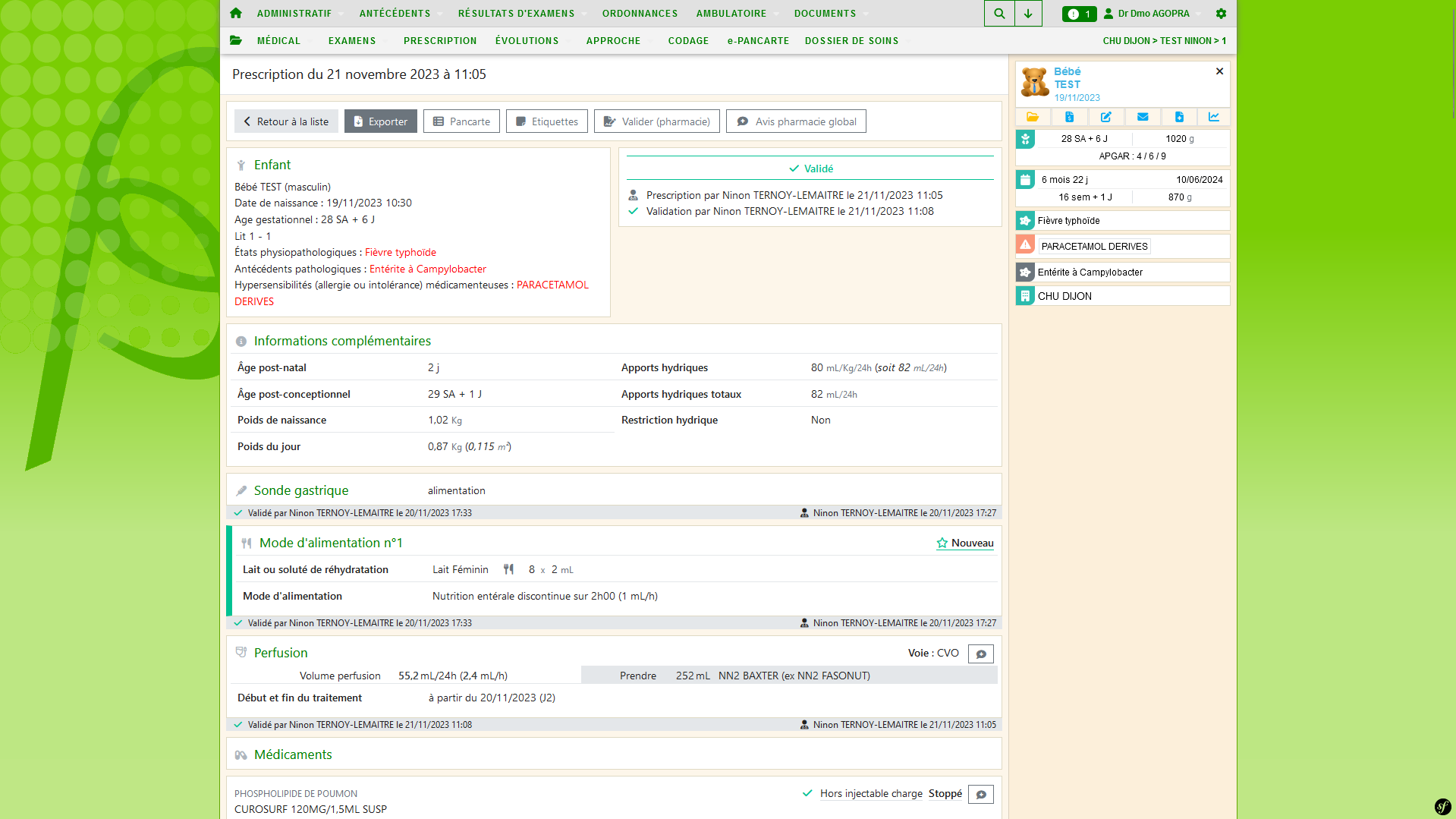
AGOPRA, an innovative software solution for perinatal care
AGOPRA is a secure web platform, designed by and for perinatal care professionals, to facilitate coordination between teams in gynaecology, obstetrics and neonatology.
It centralises the records of women, mothers and children, and streamlines communication between professionals across the care pathway, whether in the community or in hospital.
Accessible via a secure internet connection, AGOPRA gives every professional a shared, up-to-date view of the patient record, ensuring continuity of care at every stage.

A turnkey solution, designed for the field
Agopra brings together all the features expected by perinatal care professionals within a single piece of software

Comprehensive medical content
- Medical records for women (gynaecology, obstetrics) and children (maternity, resuscitation, intensive care)
- Departmental dashboard for a real-time operational overview
- Cross-institution and community–hospital–PMI use
Integrated clinical and administrative tools
- Summary sheets and departmental organisation tools
- Automatic generation of letters, referral letters and the 8th-day Cerfa form
- Automatic population of registers
- Automated PMSI and CCAM coding
- Activity management and analysis tools
- Data collection for research and clinical trials
Security and compliance
- Certified health data hosting
- Secure access for professionals
- Compliance with regulatory requirements and healthcare sector standards
An interoperable platform
AGOPRA integrates with the institution’s information system (electronic patient record, admissions management, ultrasound, biometric data, cardiotocography (CTG), coding, pharmacy, etc.)
This interoperability limits duplicate data entry and ensures smooth, reliable data flow between the different tools.
A proven solution
AGOPRA in numbers:
- more than 300,000 patient records
- more than 1,500 users
It is now used by numerous institutions to improve care coordination, the quality of follow-up and the sharing of information between professionals.