How can Industry 4.0 save French industry?
Expert insight: decoding a key issue in the industrial world
A vast and structuring subject opens up before us. At Coexya, we are committed to giving our experts a voice to shed light on the key issues in our sectors. With more than ten years of experience in the industrial world and fuelled by several years of practice and training in continuous improvement, one of our employees humbly shares his thoughts and insights on an issue that is as complex as it is strategic.
A worrying sign for the future…
The figures speak for themselves: in the second half of 2024, France recorded 34 net factory closures, followed by 25 new net closures in the first half of 2025*. This situation has not been seen for around ten years. Since 1970, France has been the European country undergoing the most significant deindustrialisation. Today, manufacturing accounts for only 9.7% of national GDP in the second quarter of 2025, compared with an average of 18.15% between 1970 and 1990.
Certain sectors are particularly affected, such as agri-food, automotive and metallurgy. Among the closures are historic industrial sites such as Michelin in Cholet and Vannes, and most recently Teisseire in Crolles, as well as SMEs and mid-cap companies.
* Net balance between factory openings and closures; Sources: Trendeo

- Decline in competitiveness linked to an increase in production costs:
– Labour costs have risen in France. Between 2013 and 2021, there was a 17.8% increase.
– The level of taxation on businesses is very high
– Energy costs are much higher in Europe than in China or the United States (for example, electricity costs are four times higher in Europe than in China and twice as high as in the United States)
- Changing consumer behaviour: customers are increasingly looking for personalised and exclusive products, paying greater attention to environmental and social issues, and becoming more connected. Launching single-unit or near-single-unit production runs is much more expensive and no longer allows for costly operations such as adjustments to be made profitable.
- Tighter regulatory constraints: in 2025, French companies will face a major transformation of the regulatory landscape with the evolution of environmental, social and digital standards. Take, for example, the intensified implementation of the Climate and Resilience Law and the European CSRD (Corporate Sustainability Reporting Directive), which requires companies with more than 50 employees to publish a comprehensive carbon footprint assessment.
- Opening up our markets to products that do not meet the same quality, social or environmental standards; one example is fast fashion, which is regularly criticised for its use of controversial chemicals and poor working conditions. On the environmental front, we are seeing more and more large cities in Asia suffocating under clouds of extreme pollution, a direct consequence of unrestricted production. Conversely, French manufacturers are investing to comply with strict regulations: quality controls, wastewater treatment plants, anti-pollution devices, etc. These obligations increase production costs and widen the gap with imported products.
- Loss of industrial expertise: too often, employees leave the company or retire without their replacements being found. Beyond a lack of foresight, there are significant challenges in recruiting certain profiles. The recruitment of machining technicians or maintenance technicians is a prime example. These professions suffer from a shortage of qualified candidates on the job market. Even the use of headhunters does not guarantee successful recruitment. At the same time, there are not enough initial training programmes and the number of young graduates entering the profession is very small. Despite attractive salaries, these professions are struggling to attract new generations.
- Lack of human and financial investment:
– Global economic uncertainty: business leaders are not making any investment decisions, putting their projects on hold and waiting to hire new staff.
– Poor corporate management: for example, at the Vencorex site in Isère, employee Séverine Dejoux believes that ‘successive operators have invested little in the platform, relying on the site’s existing assets and focusing on the most profitable activities at each transfer, to the detriment of an overall vision for the company’.
– Lack of training in future technologies
France seems to be bogged down in a wait-and-see attitude. Meanwhile, international competitors are mobilising considerable resources to develop their production and businesses, widening the gap even further.
…But there is still a solution: Industry 4.0
It is still possible to counter this situation thanks to Industry 4.0.
Before discussing some of the concrete successes of this new industrial era, it is essential to briefly explain the principle behind it. Industry 4.0 is based on the integration of intelligent, connected and autonomous systems into production and industrial processes. It encompasses a range of technologies, including IoT networks (connected objects), the Cloud, artificial intelligence, Big Data, 3D printing, digital twins, cobots, and more. This approach aims to strengthen employees’ skills by providing them with intelligent tools that increase their efficiency and inform their decision-making.
Let us now look at several examples of companies that have adopted these new solutions and which illustrate their benefits in concrete terms.
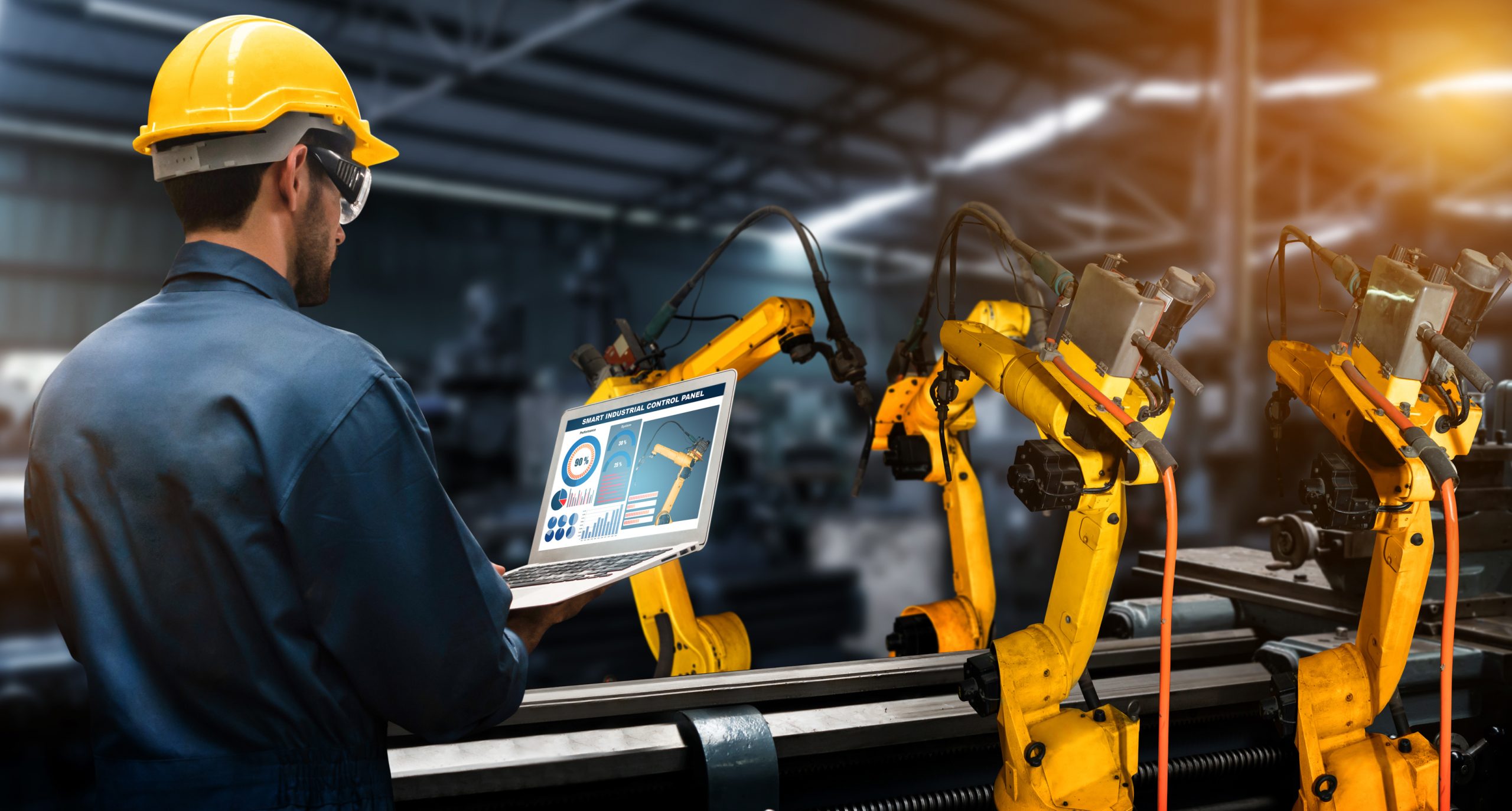
ManiKHeir has been working on the reindustrialisation in France of a skill that disappeared from Europe in the 1980s: the production of single-use nitrile gloves for healthcare establishments and sensitive industries. The site is equipped with four Industry 4.0 production lines capable of producing more than 900 million gloves per year. As of March 2024, it employs 154 people and required an investment of €88 million, €10 million of which was provided by the French government as part of France 2030 and €5 million by the Pays de la Loire region. The site began operating in September 2023, replacing a former paper mill that closed in March 2019. It should be noted that this closure resulted in the loss of 580 jobs.
To recreate lost expertise, 1,600 sensors were installed on the production lines in order to collect as much data as possible. All the data collected is centralised via SCADA (Supervisory Control and Data Acquisition) and MES (Manufacturing Execution System) systems and displayed in a control room where a team of two to three people monitors it in real time. This data plays an essential role in:
- Regulate key parameters such as pH, viscosity, temperature, tank levels, etc.
- Ensure consistent product quality throughout the year, regardless of conditions.
- Facilitate batch release, relying on a well-supported database to speed up processes and meet regulatory requirements.
- Contribute to the continuous improvement programme, particularly to optimise oven temperatures
- Innovate: for example, design a lighter glove with the same technical properties
- Extract key performance indicators (KPIs) to accurately monitor the overall equipment effectiveness (OEE)

The company is also developing a video programme capable of detecting micro-holes, small dirt particles and double layers of nitrile, in order to identify and remove gloves that do not meet quality standards. This programme incorporates artificial intelligence technologies, such as machine learning, to learn from data and become more efficient.
An order from the Ministry of Health to supply all French public hospitals will enable them to spend four years learning how to make gloves better, faster and with less waste, thereby becoming more competitive. This will give the company time to prepare for phase 2 of the project, scheduled for 2027, which involves doubling production lines. To move forward with this phase, ManiKHeir will also need support from the private sector. Phase 2 would enable the hiring of 150 additional employees, with a target of 1.6 billion gloves per year.
Without the contributions of Industry 4.0 and given the sheer volume of data involved in this project, it would have been impossible to complete.
Such projects can be daunting because they involve significant investment and considerable risk. But Industry 4.0 is not limited to this. It can also take the form of smaller, more human-scale projects that allow for gradual, controlled progress.
A concrete example of this gradual technological advancement is Puget Production Mécanique, a family-owned SME founded in 1974, specialising in precision machining and the assembly of sub-assemblies for various demanding sectors (aeronautics, defence, space, rail, nuclear, agri-food, etc.). Since 2003, the company has been gradually integrating technological building blocks to meet major strategic challenges:
- Make production flexible, agile, intelligent and efficient.
- Ensure complete traceability.
- Strengthen competitiveness through cost control.
- Eliminate operations that do not add value.
- Attract talent and develop internal skills.
- Reduce energy and environmental impact.
To address these issues, the company has gradually implemented the following measures:
- Integration of an MES enabling comprehensive production supervision with real-time monitoring of 21 machines, production planning and scheduling (budget of around €100,000 with 50% funding for the software from NUMERICA –Burgundy-Franche-Comté Digital Cluster and CETIM – Technical Centre for Mechanical Industries).
- In-house applications on tablets
- Machining equipment fitted with programmable robotic arms
- Automated tool supply system
- Reorganisation, renovation and extension of premises
Overall, more than €6 million was invested between 2014 and 2019, with significant benefits observed:
- Extraction of valuable indicators on the performance rate of each machine and consolidation of production data to increase productivity and organisational flexibility.
- 15% reduction in travel time, particularly when searching for the materials needed for each production run
- 50% reduction in internal and external non-compliance rates
75% increase in first-level maintenance completion rates - Robotisation of very small production runs
- Increased production with night-time operation of robotised machines
- Over 30% reduction in musculoskeletal disorders (MSDs) and absenteeism rates
- 25% reduction in hourly rates
- 66% reduction in gas consumption and 10% reduction in electricity consumption
These improvements demonstrate a strong commitment on the part of management, but also reflect an expectation shared by employees, who are at the heart of each initiative.
Sources:
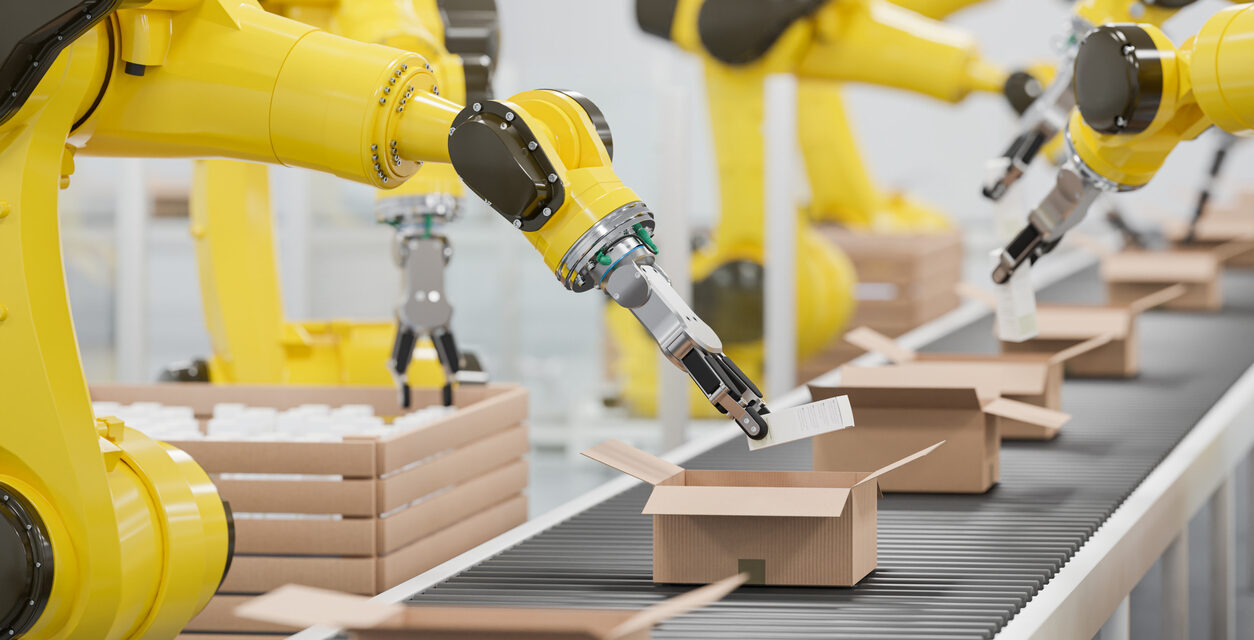
These examples highlight that Industry 4.0 represents a major opportunity for the industrial sector: it creates new jobs, improves competitiveness, facilitates regulatory compliance, compensates for the loss of expertise and enables greater responsiveness to market developments. These are all levers that respond to the current challenges facing French industry.
To support this technological transition, several support mechanisms are available to businesses. These include the French government’s ‘France 2030’ plan and funding from the BPI (Public Investment Bank), CETIM and various regions.
It now remains to be seen whether French manufacturers are ready to take the plunge. Because choosing not to evolve means running the risk of being left behind, at a time when the opportunities offered by Industry 4.0 have never been so accessible.
At Coexya, we offer you the combined expertise of our industrial and digital specialists to support your transformation projects, whether ambitious or more targeted, as illustrated above. Our strength lies in our ability to adapt to each context. We listen to your needs and analyse your challenges in order to design tailor-made technological solutions. Your satisfaction is at the heart of our commitments. Together, let’s shape the industry of tomorrow.
About the expert
Lucie Saurel graduated as a general engineer from ECAM Lyon in 2011 and holds a specialised master’s degree in Management from EM Lyon Business School, in partnership with Montpellier SupAgro. She has built up 10 years of solid experience in the pharmaceutical mechanical engineering industry. She has held key positions and progressed to production management. Her career has been marked by the management of high-impact strategic projects: continuous improvement, flow optimisation, management of multidisciplinary teams and deployment of an enterprise-wide ERP system.
Convinced of the importance of digital technology, she acquired skills in web development, which now enable her, as Industry 4.0 Project Manager at Coexya, to lead technological transformations and support companies in their transition to connected and intelligent solutions.