
Smart Urban Mobility
Transport management is changing as transport takes on new forms. How can you respond to this from implementation to decision analysis?
For over 10 years, we have partnered with of major transport authorities and operators focused on the design and implementation of digital programmes that make it possible to provide innovative services for new forms transport.
As pioneers in the field, we have expertise and techniques to support our clients in this truly digital transport revolution that has to be environmentally friendly and allow companies to offer innovative services to their employees.
We have developed strategic and technological partnerships with many recognised players in France and abroad who make up a rich and rapidly changing sector.

Our technical expertise
- Audit, consulting, and industrialisation
- Design, implementation and maintenance of digital solutions
- Service platforms, and web and mobile business applications
- Management, performance, and quality
- Multi-platform cloud
Our functional expertise
- Mobility as a Service (MaaS), Mobility Service Provider (MSP), Company Travel Plan (PDE), and Administration Travel Plan (PDA)
- Corporate Mobility Account (LOM), unified user accounts, and identity federation
- Traveller information, PRM, accessibility, route calculation, intermodality, and real time
- Public transport, bikes, bike-sharing, carpooling, and car-sharing
- Predictive analysis, Data Lake, and Big Data
- Open Transport, Open Source, Open Data, and Open Service
They trust us

MaaS & Digital Mobility Expertise: Why choose Coexya?
- Multimodal Passenger Experience: We design MaaS platforms that integrate all modes of transport (train, bus, cycle, car-sharing) to provide a seamless journey, from search to booking and payment.
- Interoperability & Transport Standards: Expertise in mobility data exchange protocols (GTFS, NETEX, SIRI) to ensure real-time synchronisation of timetables, fares and service availability.
- Data-Driven Management & Smart City: Leveraging mobility data to help local authorities and operators optimise transport services, reduce the carbon footprint and enhance the attractiveness of regions.
FAQ: Implementing MaaS and Smart Mobility Solutions
-
/ How can we ensure interoperability between different transport operators in a MaaS project?
The primary challenge is data fragmentation across stakeholders (national rail, urban networks, carpooling). An effective MaaS (Mobility as a Service) platform must act as an orchestrator capable of consolidating multi-operator sources. By using open architectures and high-performance APIs, Coexya addresses market opening requirements and provides a unified user journey, from journey planning to ticket purchase.
-
/ What are the best solutions for improving real-time passenger information?
Network attractiveness depends on information reliability. Next-generation passenger information must integrate intelligent alerts, crowding forecasts, and optimised accessibility (PRM). By deploying multi-channel devices (web, mobile, in-station displays), you ensure a seamless experience. Coexya leverages major references such as Vianavigo or BreizhGo to secure these critical data flows.
-
/ How can Data Analytics guide urban mobility policy-making?
Managing a smart territory requires measuring modal shift and CO2 emissions. Implementing a Mobility Data Lake allows for cross-referencing passenger flows with key performance indicators (KPIs). These business dashboards become essential decision-making tools for adjusting transport supply, forecasting demand through predictive analysis, and achieving decarbonisation goals.
-
/ How do we integrate carpooling and micro-mobility into a regional transport offer?
For LTAs (Local Transport Authorities), the goal is to scale up usage. Integrating carpooling, bike-sharing, or car-sharing within the MaaS user account simplifies “last-mile” travel. A robust platform handles identity federation and revenue clearing, making complementary mobility services as easy to use as buses or trains.
-
/ How can I benefit from a local partner’s expertise across France (Paris, Lyon, Rennes, Lille, Brest, etc.)?
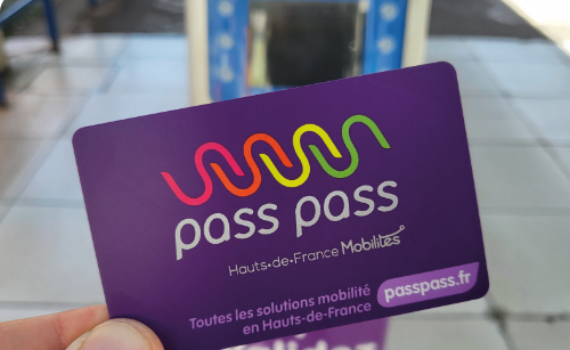
Mobility challenges are deeply local. Coexya supports regions and metropolitan areas from our offices in Paris, Lyon, Rennes, Lille, and Brest. This local presence enables us to understand regional specificities — as demonstrated with Pass Pass in Hauts-de-France or ICAR in Marseille — while providing industrial-scale mobilisation and cybersecurity expertise (ISO 27001).
