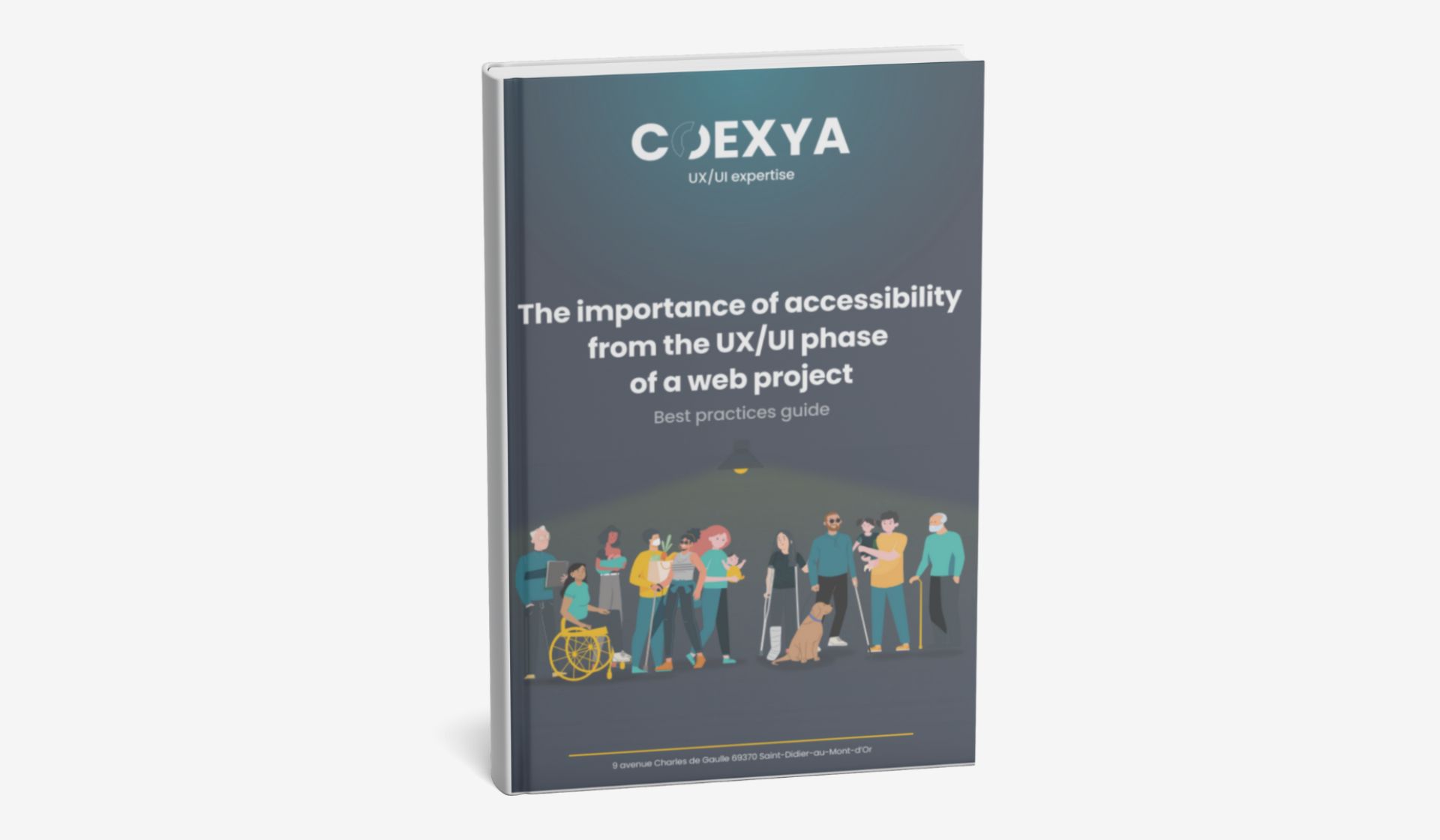
The importance of accessibility in the UX/UI phase of a web project
This guide raises awareness of digital accessibility issues and provides best practices to deliver inclusive services that meet legal requirements.
15% of he world’s population lives with a disability — digital accessibility as both an obligation and an opportunity
According to the World Health Organisation, 15% of the world’s population has some form of disability. Yet the needs of a person with a permanent disability are often similar to those of a user facing a temporary or situational constraint: a broken arm, a noisy environment, a first encounter with a new tool. Integrating accessibility from the UX/UI phase therefore means improving the experience for everyone — while meeting legal obligations around digital accessibility, boosting the site’s visibility, and strengthening the organisation’s brand reputation.
The reference framework: WCAG 2.2 and RGAA
Accessibility standards are based on the WCAG (Web Content Accessibility Guidelines), an internationally recognised framework organised around 4 principles: perceivable, operable, understandable, and robust. It comprises 13 guidelines, each with success criteria evaluated at three levels (A, AA, AAA). In France, these international standards form the basis of the RGAA (Référentiel Général d’Amélioration de l’Accessibilité). In practice, meeting all compliance requirements in full is challenging — these standards nonetheless provide a clear framework for continuous, measurable improvement.
8 concrete solutions to integrate from the outset of a UX/UI project
The guide identifies eight levers that can be activated from the design stage: careful typography, structured information hierarchy, clear and readable text, sufficient colour contrast, keyboard navigation, use of ARIA attributes, text alternatives for visual content, and compatibility with assistive technologies (screen readers, etc.). The guide also emphasises that testing with people with disabilities remains the most reliable way to ensure a genuinely good user experience. This white paper is the first in a two-part series, complemented by the practical guide dedicated to the development phase.
A publication by Coexya’s UX/UI experts:
Charlène Milly, UX Designer — Laura Gandrillon, Junior UX Designer — Murielle Couden, Project Director, Head of UX/UI
👉Find out more about our UX-UI offer